


Civics on the Rocks: What Is Congress Supposed to Do?

By Anne Trominski:

In case you were unaware, things are a bit crazy in the United States right now. In an era of shocking news stories, unheard of court cases, and generally unprecedented political events, discourse has gotten a tad tense . . . some might even say divisive.
Can we still discuss the events of the day over the dinner table? Can we realistically look to the past to deal with the problems of today? Is there an appropriate cocktail to serve for the end of times?
Three friends tackle these topics and distract themselves with other tangents in their podcast Civics on the Rocks. Steve’s an engineer, Mack’s a history teacher, and Anne’s just trying to get the mics to work correctly (with varying amounts of success). The long-form episodes are released at the beginning of each month. Living in Texas, they have plenty of political fodder to chew on, but topics cover all types of history and government. The hosts are unrepentant geeks, so they are just as likely to drop movie references as knowledge bombs but, ultimately, their goal is to try and figure out how to be engaged citizens in modern America. They’re also drinking and making cheesy jokes while doing it.
Full episodes with citations (geeks, I say) are available on their website, CivicsOnTheRocks.podbean.com, as well as all the major podcast carriers and socials.
In this episode, the trio discuss the function of the legislative branch and its role and/or complicity in the current state of affairs.
Read the edited transcript or listen to the entire episode below. And click here for references to the facts and topics discussed throughout.
This episode originally aired October 6, 2025.
Anne: The question of the day: What is Congress supposed to do?
Steve: Subtitle: “their damn job.”
Mack: No kidding. Like anything but what they're doing, which is nothing.
Steve: Well, let's go back to the origination. So, Congress is defined in Article I . . .
Mack: Of the Constitution.
Steve: Of the Constitution, because it's the first thing to worry about.
Mack: Yeah. Biggest thing that they worried about it at the convention.
Steve: Biggest thing they were worried about. Arguably most important. Primacy, you know, kind of stuff . . .
Mack: Because they make the law.
Steve: Because they make the law.
Mack: The other branches enforce the law or interpret the law, but they're nothing without the law.
Steve: The law, which is made by Congress.
Anne: Correct me if I'm wrong, they wanted a bunch of people in charge of that because they didn't want, what? What are those called again?
Mack: Checks and balances.

Anne: Kings! They didn't want a king.
Mack: Oh, yeah? Well, yeah. You don’t want that.
Anne: You know, the founding fathers of the Constitution.
Steve: Yeah, they weren't fans of kings.
Mack: Well, yeah, but there's a way of looking at that, like, you know, how Aristotle called for balanced government, and so the president is our element of monarchy, and the Senate, originally, because they were chosen by the state legislatures, would be the element of aristocracy. And the democracy is the House of Representatives, which were then chosen directly by the people, but after the Seventeenth Amendment, we now also pick the senators too, more or less.
Anne: Wait, what?
Steve: Yeah. Originally, senators were picked not by popular election but individually by state legislatures.
Mack: Were chosen by state legislatures. Yeah.
Anne: Oh, I knew that.
Mack: And yeah, and it became incredibly corrupt . . .
Anne: Wait. When did the Seventeenth Amendment hit?
Mack: Part of the Progressive ERA, early 1900s.
Steve: So Congress makes the law . . .
Mack: Yeah.
Steve: Makes the laws that the other branches have to execute, implement, and interpret. That's it. And also frankly, though through law, but sort of separate from it, they control the finances of the government.
Mack: Oh, yeah.
Steve: So no money/no-thing can happen without Congress saying that it happens. And, conversely, if Congress says it happens, it needs to happen.
Mack: Yes. And that's also important about the money part, because it's specifically in the Constitution that no appropriations shall be made but by law. So any money that is spent has to be done by law, which is kind of relevant today because there has been money that has been attempted to be spent or not spent, not in accordance with the laws that were passed saying what this money should be spent for.
Anne: So to clarify, Congress was like, “Hey, we should spend this money here.”

Mack: Yes.
Anne: And some . . . who exactly said, “No”?
Steve: Well, the only people . . .
Mack: I'm going to say it's not just Donald Trump.
Anne: But the executive branch?
Mack: There’s Project 2025, too. Well, okay, ultimately, the stuff that's not getting spent where they're like, no, no, no, no, we're not going to spend that is Trump plus the immediate advisors making the decision because --
Steve: Enablers, puppet men, whatever.
Mack: Not all of it is . . .
Anne: But according to the Constitution that's not what they do. Congress is supposed to decide that.
Mack: It must be spent by law. And even though the appropriation may say, okay, this money is going to get spent through whatever agency of the executive branch or whatever. You still have to follow the law.
Steve: And the law says spend the money.
Mack: And in fact, during Nixon's administration, Nixon tried what is called “impoundment,” refusing to spend certain federal funds. That was, there was a Supreme Court case for that, the Supreme Court ruled that unconstitutional because Congress has authorized it. And it was a law. It was either signed by the president or --
Steve: Which is other kind of interesting point, which is worth noting, which is not only was it passed by Congress, a president signed it.
Mack: Yeah, or a veto. It could be a veto override.
Steve: Or a veto override.
Mack: But either way, even if it is, the president has no choice.
Steve: Yeah, it's a law. You follow the law, unless you're a dictator.
Anne: Can we give an example of what's going on currently? Just one . . . big problem.
Steve: I’m going to go with USAID.

Mack: Yeah, USAID.
Steve: Because it kind of covers things. But first of all, Congress passed money to fund U.S. Agency for International Development: USAID --
Mack: Which did involve billions of dollars --
Steve: Which involved billions of dollars, and it was designated for different kinds of programs or different kinds of spending expenditures. And Trump just decided, “Nah, I don't wanna.”
Anne: And that was part of the DOGE-ness, right?
Steve: That was, that was . . .
Mack: It was, but it was also Project 2025.
Steve: Yeah, 2025 had it, and some people have not liked AID for years, and whatever. Bottom line, Congress passed, and the president signed into law the expenditures for DOGE—for DOGE, sorry—for USAID and then they just changed their mind and said, I don't want to spend that. I'm not going to and not just this program here to fund, like, food in Zimbabwe or whatever, I don't feel like paying the staff of the agency. I don't feel like paying the rent for the buildings.
Mack: And it is grossly unlawful.
Anne: Right. But meanwhile, it's happened.
Mack/Steve: Yes. Yeah.
Anne: There have been consequences like, these, aid has stopped going to these places that --
Mack: Yes. And food is spoiled and supplies have . . .
Anne: Have been destroyed.
Steve: Children aren’t vaccinated. Whatever. Yes, exactly. Yes.
Anne: And has Congress done anything about it?
Steve: No.
Mack: Zero.
Steve: No. Thank you for that.
Mack: Because they're a bunch of cowards.
Anne: Wait. Hold on. We're getting there.
Steve: So, yes. So Congress passes laws, and what else can Congress do?
Anne: Right. So, the executive branch was like, "No, I don't think so," and even though they're not legally allowed to, according to the Constitution, they are defying this law that was put in place by Congress.
Mack: Yeah, several.
Anne: If Congress wanted to, you know, uphold their own laws, what would they do about this?
Mack: Well, you would have to . . .
Steve: Well, let me build on that context. So how did this happen? The president directed his people to not spend the money. So the people in the executive branch stopped spending the money, which caused people to lose their jobs --
Anne: Does USAID --
Steve: USAID or pick your favorite agency.
Anne: It rolls up to the executive branch.
Steve: Yes, it's all in the executive branch. So it's under the control of the president, the president’s responsible for executing the laws and the funding associated with them. So the president told these people to not. And so even though that was against the law, the president told them to, so they stopped. They stopped paying the bills, they stopped paying the contracts. They furloughed the people.
Anne: Right.
Steve: So that destruction happened of the agency, the contracts fell by the wayside. The people left because they had to go find jobs. All that. The destruction happened. In the meantime, people were going to the courts to say, hey, this is illegal, which is all well and good but takes a long time, and if you win in the courts --
Mack: You still need to buy groceries.
Steve: You don't have an agency anymore to rebuild because everybody left.
Anne: Right.
Steve: That kind of thing. Now, what could Congress do? It's not just the courts that have a say in this. Congress could do things. Congress can do, haul people in front of them to testify. Congress can hold up other funding. Congress can say, we're not going to fund any travel for the White House at all until you fix this. Congress can haul everybody that . . .
Anne: Wait a minute.
Mack: Congress could impeach and expel.
Steve: Congress could impeach and expel at the end. I mean, there's a lot of crap they can do along the way to make it look, say, you know what? We don't feel like confirming or any of your judges or any of your staff until you restore --
Mack: Oversight hearings.
Anne: I wanna go back to something. So, like, as of our recording, the president is overseas right now being wined and dined by monarchy. Congress authorized the money for him to travel?
Steve: Yup.
Mack: There is an allocation for the White House for, different allocations for, like, you know, travel and other expenses, upkeep of Air Force One, the White House.

Steve: Congress pays the lights for the White House, Congress pays the secret service.
Mack: You know, down to, you know, you buying the plungers for the toilets from the General Services Administration.
Steve: No. Yeah. Congress, if they are angry, they can stop any of the funding they want to stop, and they can haul people in front of them.
Anne: Okay. That was my next thing.
Mack: Oversight. Which was never better named.
Anne: Okay. So . . . all right. So, I've seen things in the news of people testifying to committees in Congress, and there's, you know, much sparring of words and saying of things.
Mack: And that's usually all it is.
Steve: Yeah.
Anne: Well, okay. So. Right. What is the point of that?
Steve: Well one it can impact public opinion, and it can bring to light things that they're trying to hide, but also it ties them up. Let's be honest. You know, you don't want your Secretary of State sitting in front --
Mack: If you're competent.
Steve: You don't want your Secretary of State having to spend six months in front of Congress testifying. You’d rather them go out gallivanting the globe and being diplomatic.
Mack: Well, I don't know about the current . . .
Steve: Well, I know, but I mean, you can pull people in, and it stops them from doing their jobs, quote unquote, to testify to Congress.

Mack: But I'm going to say this, that if Congress were calling them in enough that it, like, hogtied them doing their job, the president would have a valid reason to say this is violating separation of powers.
Steve: Yes. But until you get before you get to that point, those people are so big on themselves, they're going to be annoyed at how dare Congress call me? So after, like, two days, they're going to be really incensed at having to do this.
Mack: Okay. But the other thing is, is like, what if they decide not to show up? Well, you can be held in contempt of Congress, but that would imagine a Congress that has a pair.
Steve: Yes.
Anne: Well, what would happen? Like, if somebody was in contempt of Congress? What could Congress do?
Mack: I think there's a fine, I don't know. Well, I guess you could put them in prison.
Steve: There's a couple of paths. One is, in theory, this whole Congress would try to imprison you, but then how do they do that? Do they have any staff?
Mack: It’s a civil imprisonment, it’s not a criminal one.
Steve: Like, yeah, they have to send their, like sixty-year-old, seventy-year-old sergeant arms to do it . . . but they can also just say, we're not screwing with that. We're just gonna cut your funding. Honestly, at the end of the day, it's power of the purse is Congress’ biggest power.
Mack: That can become a game of chicken because, depending upon what you're cutting funding for, that might be worse than the --
Steve: It might be, but well let’s --
Anne: Give an example.
Steve: Government shutdowns overall.
Mack: Well, okay. Let's talk about --
Anne: Let’s give a specific example. Like, say, the FBI director was testifying in front of Congress.
Steve: Hypothetically.

Mack: Which he just did, if you could call it testifying.
Anne: Yeah. And they're like, the congressmen on that committee are like, this guy's full of shit.
Mack: Yeah.
Steve: Yeah.
Anne: And they keep calling him in because they want better answers because a lot of his answers, not so good. And he's like, I've got better things to do and doesn't show up one day.
Mack: Realistically, they’re not going to --
Anne: Can they cut the FBI's budget?
Mack: Yes.
Steve: Yes.
Mack: They wouldn’t though.
Anne: No, but, like, could they?
Steve: They could. They can also be more surgical.
Anne: How so?
Steve: They can say we're going to fund the FBI—except for your office.
Anne: The head of the . . . director?
Steve: We're going to zero out the director’s budget.
Anne: Like they don't pay the director?
Steve: Yes. The director gets no money. Director’s staff gets no money.
Anne: But every, the rest of the FBI gets --
Steve: The rest of the FBI gets . . . They can write whatever they want.
Mack: I mean, that may, depending upon the original laws that were to govern the FBI, they may have to change some of that in order to do it, but they could.
Steve: They can do it. They could say the president doesn't get Marine One as a helicopter anymore, he gets a bicycle.
Mack: Okay, but here's the other thing. Let's talk about how this works, because in order to . . . so, for funding, you know, requires passing both houses of Congress but then also president's signature unless you can do a veto override. But what we are talking about is like zeroing out things that are in the budget that goes to the president. Well, then maybe the president just doesn't sign the budget --
Steve: Correct.
Mack: Maybe there's not enough for a veto override. Then we're facing government shutdown.
Steve: Right.
Anne: How much is there needed for a veto override?
Steve: Two thirds?
Mack: Two thirds vote. Of both houses. Not combined, but individually.
Steve: But let's say it's just the FBI director they're ticked at. Okay, let’s say they pass a law. They pass the budget—which they haven't ever done in 20 years—but they pass a budget that fully funds the whole government, per the president's request --
Mack: We should come back to that point though.
Steve: Except for the FBI director, who they completely zero out, the entire FBI director’s office and staff because they're pissed at that one person. And they say here, president, here's your budget that has everything you want except for the FBI director we're pissed at. So he's got to now choose: Do I veto this because of the one guy, or do I fire the dude and replace him because Congress is pissed? Or do I stamp my feet, hold my breath, and shut down the government?
Mack: Okay, but is the new guy going to do any different?
Steve: That’s a question.
Mack: ‘Cause normally, we would expect the FBI director to be, to a certain degree, independent because it's why they have a ten-year term and the whatever, and we don't expect them to be a stooge of the president.
Steve: And yet somehow. But in this case, like in this scenario, if the president’s [he means Congress] ticked at one person, they can target budget cuts at that one person. If they don't want to go to impeachment. Not judges, but they could do the one person. And then the president is basically forced to either I shut down the government by vetoing the budget bill over the one person, or you just get rid of the one person Congress is pissed at, and we all get profundity.
Mack: But if it's not just the person, if it’s what the person won't do because the president doesn't want them to do.
Steve: And if, on the lead up to this, this doesn’t just happen, right? This is the, like, the Congress makes known to the president they're pissed, they tell him what's going to happen so that he's making a decision well in advance knowing what's going, how this is going to play out. This is not like, they just wake up one day pass a bill.
Mack: This also presupposes that there's no abject cowardice.
Steve: This is the thing. This goes back --
Anne: We’re talking theory here. We're not talking the current situation. We're going to get there.
Steve: Yeah. But that is, Congress has a variety of levers. They can haul people in front, which is uncomfortable and awkward. They can cut strategically, very surgically, funding to specific programs, knowing which hurts. So those are both levers they have to pull.
Anne: But when we say shut down the government, like, how literal is that?

Mack: Not quite.
Steve: Ah . . . pretty.
Mack: It’s not like the door is locked and a sign is put out, because there's essential personnel that during a government shutdown, what that means is . . .
Steve: It’s not shut down everywhere, but it's shut down some places. Some doors are locked.
Mack: There’s a lot of government employees that are told to stay home. We can't pay you. Now when, since the 90s, when there have been government shutdowns, there’s also been, when the shutdown was resolved and everything was kicked back up again, all of the federal government employees that were not getting paychecks got back pay. They did that for them. But, yeah, no, there's government employees that are told to stay home because they are not going to get paid. But there are essential personnel that even though they're not going to get paid, they're told you must show up. And we're talking about certain people, like in the FBI, for example, and other, like law enforcement stuff, other law enforcement agencies, and then military. And it's like, well, you got to show up anyway because there are certain things that we have to do. But the other part about the shutdown is when you run into, well, how long is this going to last, and are Social Security checks going to go out? Because, this isn't just about paying government employees, it's about the transfer payments. Social Security, people like Medicare, Medicaid, stuff going out and other things.
Steve: And all the contracts. All the contracts, which there are a lot of.
Mack: Which are like, hey, we can't work on this highway anymore. We're going to have to wait. Everybody stay home for Christmas.
Steve: A lot of things get impacted by the stopping the flow of government funds. And it's not just, you know, workers in D.C. It's not just federal programs and national parks. It's a lot of state. A lot of federal funds go to the states to be administered for a variety of things. Highways are [an] easy one. There's some education stuff, there’s other things. All that gets constrained, and either programs get suspended, work stops. A variety --
Mack: It depends on how long it goes, how bad it is.
Steve: And where they are, yeah.
Anne: So, all right, Congress, basically their weapons, if somebody isn’t --
Mack: Power of the purse.
Anne: They get to write the laws, right. They've written the laws. So their weapons are public humiliation. They can bring people in front of them and grill them and expose them. Try to turn popular sentiment against them.
Mack: Okay, but let’s be fair. The humiliation is usually all on the side of the members of Congress, a lot of whom are lawyers that never got to have their Matlock moment in the courtroom, so by God, I'm going to have it here in the committee. Often they look like idiots.
Steve: But there’s been a lot of moments in history where the testimony in front of Congress has been the pivotal news-making thing.
Mack: Yes. Very often, and is talked about in the history books.
Steve: Yes. McCarthy and general what's-his-face? Yes, I know, but whatever.
Mack: MacArthur?
Steve: No, not MacArthur. McCarthy in the McCarthy hearings and the one --
Mack: Oh, it wasn't a general.
Steve: No, it was.
Mack: Well, no. Okay. Well, that was that was the attorney representing, the counsel representing the U.S. Army. Joseph Welch.
Steve: Oh, okay. Sorry. Yes, yes. Right.
Mack: And it actually had to do with, like, this sidebar thing about trying to expose a person who was on the side of the whatever.
Steve: But that's like the defining moment of McCarthyism. You got Dean and Watergate, you got several things were like, yes, well, often it's a lot of people grandstanding for themselves, but pivotal historical things do come out of those hearings.
Anne: Right, so there's a certain amount of public exposure, right?
Steve: I would actually say it's kind of Congress’s power of the pulpit.
Anne: Airing the dirty laundry.
Mack: Yeah. On occasion, yeah, and sometimes by design.
Anne: So, there’s that method of . . .
Mack: Madness.
Anne: Of trying to control the situation, of Congress doing something.
The second method is, as we said, the power of the purse. They can revoke the funding of key players. They could shut down all of government if they really wanted to.
Steve: If they're not being surgical, yeah.
Mack: And some of that came into play with Vietnam because, you know, things that had been taking such a turn that there was increasing support in Congress for . . . we just, you're going to have to bring the troops home one way or another because we're about to [whistle].
Steve: Yeah. It's a way, albeit distorted, that popular sentiment is expressed through our representatives, frankly.
Mack: That’s their point.
Steve: If the people are really pissed, and the representatives are halfway doing their job, they pick up on that and communicate the populace’s sentiment to the powers that be through their hearings and all their --
Mack: There’s an “although,” but I’ll get to that . . .
Anne: And then the third way they can do something is impeachment.
Steve: Yes.
Mack: Theoretically.
Steve: Which is, and it's important, I guess, to compare and contrast these, right? So, when it comes to the hearings, they can do that all by themselves.
Anne: Right. At any point in time.
Steve: At any point in time, it’s generally controlled by the majority party in whatever house you're in. But not solely.
Mack: There's also regular hearings that are set for when, like, what is it, every three months the Federal Reserve chair comes before Congress and there’s others that regularly --
Anne: Well, the committee hearings are regular.
Mack: In the committees, yeah.
Steve: Yeah, very often, department heads have to come up.
Mack: It’s only going to be committee hearings because you're not going to have a hearing in front of the whole . . .
Steve: Yeah. So, but you’ll have almost every head of a cabinet department, every head of a major agency comes in front on a regular basis in front of Congress. There's always opportunities to air things. That's there whether they’re scheduled or not. You can call people up on demand for certain things. You can call anybody in theory . . .
Mack: And if things were normal, a lot of these regular ones would just simply be informative.
Steve: Yeah. So it just updates. So those are like Congress can do that no matter what. Somewhat controlled by the majority party but not solely. Passing of the laws and passing of funding is a law they have to pass, so the president has to sign off on it or they have to override the veto. So that's a thing. The impeachment is the other one where Congress by itself can impeach and --

Mack: And can remove officials, including the president.
Steve: Yeah.
Mack: Or judges too.
Steve: Or cabinet members.
Anne: Including Supreme Court judges.
Steve: Yes. Any federal judge, any cabinet member. One thing worth noting about impeachment is Congress can impeach federal judges, cabinet officers, basically anybody that they've been involved in the appointment of, they can impeach. But that’s . . . generally speaking, they don't have to impeach them just because they're mad at that person. They can impeach them because of a problematic policy, like, say, destroying vaccines. They can impeach them because there’s somebody below them they can't reach who they're mad at, and they can say, oh, like, for instance, let's say your Senate-confirmed official appoints somebody to a vaccine control board that is destroying vaccines. And so they want to get that person out, but they can't reach that person because they're not Senate-confirmed or whatever. They can threaten to impeach the head of the Health and Human Services if they don't remove that person and fix the problem.
Mack: Although they can still vote to cut the salary of the person --
Steve: Yeah. So I mean, they’ve got different techniques they can use directly and indirectly to address pretty much anything that they don't like in the executive branch.
Anne: And to go back to something you guys brought up earlier is the idea that a lot of this, you know, we're talking about the stuff that happens in public, right? We're talking about the public airing of dirty laundry and whatnot. A lot of what happens is behind the scenes horse trading. Is going to the head of Health and Human Services and saying, look, nobody's happy with this guy who’s destroying vaccines. You can either do something about it or we're going to do something about it and giving them a chance to clean house.
Steve: And generally, they always want to address it quickly and smoothly.
Mack: Well, and I also want to say, speaking of the behind the scenes, one of the things that I guess you could say facilitates it, for good or ill, is that so many, and including members of the media, like, you know, the White House press corps, Washington, D.C., these people went to school together. So many of these people went to, like, Ivy League schools or, you know, and so many of them, like, know each other. And there's all kinds of behind the scenes conversations. Which, in its best form, sort of like greases the gears and allows things to work more smoothly, even though sometimes publicly it may be a little rough around the edges, but also the danger is, like, okay, well, they're sort of like conniving in some way.

Steve: Right. Well, take the example of Nixon's resignation. Where a bunch of senators from his party came to him and said, “Here's the thing, they're likely to vote to impeach you, and we're likely to vote to convict you.” And so he says, “Well, then I'll resign.” I mean, I’m condensing, but I mean that's an example of like the behind the scenes thing kind of working out better than if it had all been drug out for months and months and months.
Anne: Well, and I mean, ‘cause that's something that came up when Joe Biden was elected was that here he had kajillion years of horse trading behind the scenes with all these people.
Mack: And you probably wouldn't find a better horse trader.
Anne: Right. That he would be able to get more stuff done than Obama, who was relatively an outsider coming in.
Steve: Yeah. Yeah. Absolutely.
Mack: Newb.
Steve: He was, what, in the Senate two years?
Mack: The U.S. Senate for two years, before that he had been state senator from Illinois.
Anne: Right. So it’s . . . I mean, and some of that comes up, right? You know, that this divisive, you know, us-versus-them mentality is getting in the way of what was a natural part of our government, which is, yeah, you might present something to the cameras, but in backrooms you're being a little more practical and getting a little more handshakes under the table and whatnot to get things moved through.
Mack: Some of that dynamic sometimes hap . . . needs to happen within a party.
Anne: [dramatically] Reaching across the aisle.
Mack: Well, it can be that, but sometimes it needs to happen within a party.
Steve: Yeah. That's a good point. Yeah.
Mack: Like, think about it. Like, not so much we . . . it's hard to think of present-day examples, but like think about Johnson in the 1960s with some of the stuff he won, including the Civil Rights Act of what became the Civil Rights Act of 1964, and then-Senator Hubert Humphrey, you know, did a lot to push for it. But there were, there was all of the horse trading that had to be done . . . well, almost all of the horse trading was within the Democratic Party, because Southern Democrats were not voting for it except for, well, Al Gore Sr., Estes Kefauver, and I can't remember who, but . . .

Anne: But, that again, wasn't Johnson . . . he had been in Congress before.
Mack: Yes.
Steve: Oh, yeah.
Mack: He had been in Congress since the thirties.
Anne: And he had a lot of friends and favors to call on to get that kind of legislation passed.
Mack: Yes. Before he, before Kennedy asked him to be vice president, he had been majority leader in the Senate. And, incidentally, at the same time that the House speaker was Sam Rayburn, both of them from Texas.
Steve: And I think, some of it is like the whole favors and that kind of thing, some of it is just also, you know the person, you've worked with them on a variety of issues. You have an understanding of each other, where you're coming from, what your priorities are and your needs and your wants and how honest, how reliable a person is, you know. And so you start off with a much better understanding of each other so you can get to an agreement. Whereas if somebody is out of the blue, you have no idea where they're coming from or what they want. So it's harder to trust them.
Mack: Well and yeah, because they're a loose cannon.
Steve: Yeah. Yeah. So it's, some of this is, I mean, this is not unique to Congress. It's kind of way people work, in many ways. If I'm familiar with somebody, it's easier to work with you and get things done.

Mack: So, speaking of Sam Rayburn, famous quote from him, “To get along, go along.” And there's a concept in, you know, in studying Congress called “log rolling.”
Anne: What is it?
Mack: Log rolling.
Anne: Oh, yes.
Mack: Rolling logs. And what that is basically is that . . . okay, as a member of Congress, there's certain bills that I am definitely in favor of that I definitely support, maybe even some of that I sponsored. And then there's going to be other bills that I don't give two shits if they pass. But then, that's somebody else's bill.
Steve: Somebody cares deeply.
Mack: Somebody cares deeply. And then maybe, you know, they don't necessarily care one way or another about my bills. So we do a little horse trading. I'll vote for yours if you vote for mine.
Anne: Right.
Mack: That’s log rolling. And that's like . . . okay, and if you've seen the movie Charlie Wilson's War—which is an entertaining film. Tom Hanks is Texas representative Charlie Wilson, and it was, the screenplay is by Aaron Sorkin or whatever. There's a scene where he's talking to Philip Seymour Hoffman playing Gust Avokatos, that he says, you know, “The people in my district don't want much. They just want, you know, this and this. I get to say yes a lot.” And that's why, so many people owed him favors and why he could get stuff done. And that's, you know, that is sort of a, it's not something that was necessarily in the textbooks. But that is sort of like classic Congress. And we are in an age where to some extent that is sort of gone out the window. And we can talk about potential reasons for that, but I'm going to say one of them is from around the late 90s, early 2000s, the Republican Party, and I'm thinking of like Tom Delay, but not just him. They worked to make sure that money from political action committees was consolidated into certain PACs—political action committees—that if you were going to run for Congress, you didn't have a chance of getting the money you needed for your campaign unless you got money arranged by this PAC, and you wouldn't unless the leadership signed off on it.

Steve: Partisan leadership got much more control of funding --
Mack: Much stricter.
Steve: For congressmen. And also, they removed a lot of the institutions that were in place where congressmen would come together in a nonpartisan way. Including, you know, some of it was just, some of the, when they would bring freshmen in to orient them to Congress, they would do it together as a class. They changed some of that to where it was more of a partisan divide. They actually changed some of the work structures in the norms in the weeks where you wouldn't bring your family to D.C. because it used to be everybody was in D.C.
Mack: Everybody lived in D.C. because you were working so many days.
Steve: Your kids went to school together. Your wives knew each other. Everybody knew everybody and had to live with each other after votes. So they had to get along better. They couldn't be as vile to each other. But then all of a sudden, you start enabling your Congress, your members to only be in town for three days a week. Well, then the family stays back at home.
Mack: And it's also in part because of the demands of fundraising . . .
Steve: And the demands of fundraising.
Mack: And so, yeah, you're there three days a week, and the rest of the time you're flown home, your family lives in your home state.
Steve: Starting in the 90s, they controlled a lot more of the funding. And they limited the contact between parties, and so it became easier to . . . you didn’t get the connections, the other parties. You vilify them. You had to obey the party leadership just to be able to come back. And they built that.
Anne: That’s, we've kind of talked about the power that Congress has. We've talked about why it has gone awry. So now we have a Congress that . . .
Mack: In theory.
Anne: Are they doing anything? Like, what are they doing?
Steve: Not much.
Mack: Well, hearings. They're still doing some hearings,
Steve: Yeah . . . just a little bit. Not much!
Mack: And if . . .

Steve: How long has it been since we had a budget passed?
Mack: Well, it has been decades, I think.
Anne: Well, they just did a budget extension.
Mack: Well, it's a continuing resolution . . .
Steve: Continuing resolution extensions. They have not done a proper budget in like fifteen years --
Mack: So the shorthand of this is . . . continuing resolution is sort of pay as you go. It's like, oh okay, we need another, there's going to be a funding, we got to go, so we're going to do a continuing resolution to fund the budget for this quarter or this month or, you know, whatever it is. It's not like at the time appointed by law, incidentally, that they've finalized a budget that says, okay, here's the budget for this coming year.
Steve: And usually we're talking about when there's a scandal or Congress is controlled by a different party than a president. That dynamic has been thrown in the Trump administration’s . . . Like, for instance, right now, it's wild to me because Congress isn't doing a whole lot. And partly, yes, they're not opposing him. But then again, that's because they're controlled by Republicans. But they're also not supporting him. Like, he's just doing shit.
Mack: They’re biding their time.
Steve: They’re doing stuff that he could do legally if he could get Congress to pass it. And in theory, he could, because they're Republicans. But he's not bothering to go to Congress to pass things, like renaming bases. There's one. You know, he could get that done legally by going through Congress, but he just doesn't bother. And I find it very interesting why a Republican president isn't going to a Republican Congress to enact his policies via law.
Mack: Well, it's to establish that the authority is with him, even though it's not.
Steve: I think exactly right. I think he's intentionally bypassing Congress to moot out Congress.
Mack: I’m going to say this is not 100% him doing this. I'm going to say this is also Project 2025 people. And a lot of people who know exactly the way the law and the Constitution work, and they are saying, for instance, renaming the Defense Department the War Department, because that's what it was in the World War II or whatever. Well, not exactly, because there was a War Department. There's also a Navy Department that was a co-equal cabinet department. And anyway, but the point being, when you read the executive order, it's more of like a, even though it's the Defense Department, we'll call it the War Department. It's an informal change. He's got people who know what exactly they can say to sort of get away with. But knowing that out there in the world, the news media is not really going to make that distinction between the actual formal renaming of a cabinet department and then Trump's executive order.
Steve: Well, true, the media, but also, like, general public. I mean, this is a new, I mean, it’s, they’re working the nuances to make bigger changes appear, but their bigger changes are in some ways the reality because that's the perception, because they're short circuiting now--
Mack: And that's, the perception is the important, to make it seem like he's going to do this anyway, whether he has the power or not, when actually what he's doing doesn't violate any law. It's just sort of a spinning your wheels kind of a thing. And but as long as public perception is, you know, he's just taking power from whatever, his supporters are going to look like, “Yeah. Fuck the law.” Because how many of them have actually more or less said that?
Steve: Yes.
Anne: Or said that themselves.
Steve: Yes, exactly.
Anne: Okay. So I get things like the War Department, . . . that executive order doesn't really have any teeth. It's more for show, it's more for the news cycle, which the news cycle fell for because they’re idiots.
Mack: They will always accommodate it.
Anne: Because they love to repeat what he says. So, I get that. Then you have things that are actually pissing off congressmen, that are actually making them upset, that are actually affecting them and their base that is voting for them.
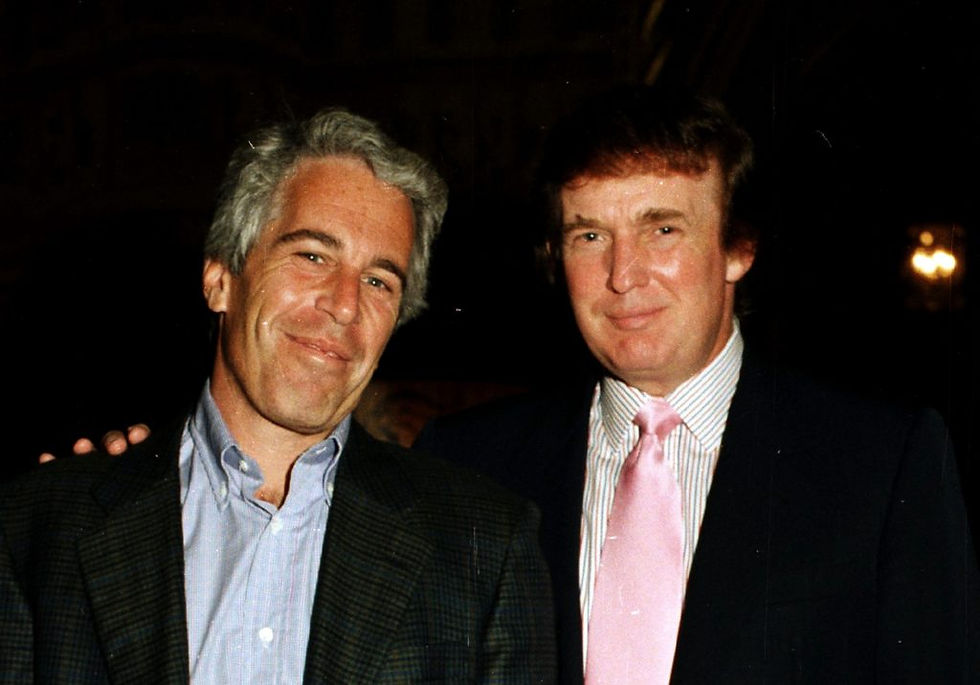
Mack: Release the Epstein files.
Anne: Why isn't this Congress fighting back on those things?
Mack: They’re scared.
Steve: Yes.
Mack: Flat out. They're scared of the --
Anne: Scared of what?
Steve: Getting primaried.
Mack: Getting shot.
Steve: Well, that too.
Mack: They are, and this happened in Trump's first term, I haven't seen any stories, you know, recently in this term, but the number of members of Congress that received death threats, like, skyrocketed. And we know that, well, okay, we know, yeah, we know that there's plenty of potential for violence, and there has been actual violence --
Anne: I don't want to downplay that because we are in a very violent time. Violence is increasing in our culture, and to pretend it's not is ignorant, but is that the only thing? Because honestly, I don't believe that it would be the only thing.
Mack: They also don't want to lose office. They don't want to get voted out.
Steve: Which goes to my primaries thing. They know that if they speak out against the administration, that massive political weight and money will flow to their opponents in the primary.
Mack: Yeah, they’ll get primaried.
Mack: You're done.
Steve: And so they're going to get attacked from the right, or whatever, Trump is going to rile up his supporters. Musk is going to donate money to his opponent, or whatever, and attack them. And so they could lose the primary.
Anne: Okay. So, and obviously things change very quickly around here, but, right, just recently, Trump's approval rating has been the lowest it's ever been. Would that be enough, do you think, and I, this is conjecture, for members of Congress on the Republican side to go against him because the reason why some of this --
Mack: No.
Anne: Well, hold on. The reason why some of this is, his approval is dropping is because people like farmers are being impacted financially. This is hitting people . . .
Steve: Yeah. Where they live.
Anne: According to what they voted on. You know, which is the economy. A lot of them said that that's why they voted against Biden, you know, or against Democrats, because of Biden and "what he did to the economy," quote/unquote. So if they are suffering, and they are economically, and a senator, a Republican senator, is hearing this from the people who are going to vote for him in enough numbers, would that be enough for them to go against Trump?
Mack: No, I don't think so. There may be some individual circumstances here and there. But, and let me say why. Because when you're talking about farmers and ranchers that are being stomped on by these tariffs. Okay, among voters, how many voters are suburbanites and how many are farmers and ranchers? And with, you know, suburban America, you've got well, and even some urban America, you know, you have more of them are able to withstand the strain of the higher prices and additionally believe that this is just—and people in the Trump administration, including Trump, said, you know, okay, you know, we may go through some hard times, but eventually you won't have to pay income taxes anymore. All the revenue is going to be from tariffs, which are all paid by foreign countries. All of which is bullshit. But, you know, that's, so I think --
Anne: Even in the South, even in the poverty-stricken places of the United States? Because those are the red states.
Mack: Look who the likely voters are, though. And . . . Okay, and for one thing, if you're talking about the South and the red voters in the South, they're more likely to vote for him just because they ain't ever going to vote for a Democrat because of culture war stuff. They would vote for Trump because of the immigration stuff and ICE finally getting rid of all these people, even though it's hurting the economy of their states . . .
Anne: They don't see that. They see just --
Mack: It’s, they see it's like, well, it's going to hurt, but this has been needed to be done for a long time, and it's really the fault of the Democratic Party that it's taken this much to set things right.
Steve: I don’t quite agree. I think at some point Republican congressman, reps, senators will eventually see that they're in enough trouble that they would turn, yes. But I don't think it's too soon. And I think it's rare. I think it's it would have to get so extreme that it'd be kind of ridiculous for them to do it because of those issues. I think most of their voters are going to stay with, that voted for Trump, are going to stay with Trump because they're not voting for rational reasons.
Anne: Well, let me posit it a different way. Right. So right now, we have three branches of Congress, or three branches of government. And Congress has power because of that. If there is an executive branch that is increasingly acting like, no, it's the only branch that matters, aren’t they effectively taking away power from the other two branches?
Mack/Steve: Yes. Yeah.
Anne: Isn't it in the vested interests of those two branches to push back?
Steve: Yes.
Mack: How does Congress do that?
Anne: Well, that's what I'm saying, is like --
Mack: Absent impeachment and expulsion, which is a two-thirds vote in the Senate.
Steve: Well, right. But, I mean, that's what we've talked about, is that they could if they wanted to start ratcheting up hearings and budget constraints and things. There's things they could do.
Anne: There's things they could do that they are not doing right now.
Mack: Sure.

Steve: One of the theories, which I think you're basically is what you're getting at, is that the founders thought that, oh, the people in Congress are going to want to keep their power as congressmen. Therefore they're going to push against any usurpations by the executive or the judiciary, and vice versa. Everybody's going to try to jealously guard their institution’s power over other ones. And yet we're at this point now, it's been so distorted by partisanship, on the Republican side, that they don't, they're willing to sacrifice Congress's power to feed the executive so that they can stay in their little privileged position in Congress and not have to really do anything.
Mack: Well, and here's the other thing, though. Congress doesn't have an enforcement arm. In fact, the enforcement arm of Congress is the executive branch. And if you have the executive branch going off, literally the only thing that could be done is impeachment and expulsion. But then, like, hypothetically, let's say that happens, then you have J.D. Vance.
Anne: Right. I understand this isn't an easy solution, but there is something more that they could be doing than they are doing now.
Mack: Absolutely.
Steve: Yes, yes, yes.
Anne: And isn't it in their best interest to start doing those things?
Mack: Not only, well, it's in the best interest of the nation, but it also is in their best interest. But for them, their calculation is based on their fear. Number one, well, fear of violence against them for opposing Trump, but also, the fear of losing their office. Really at a minimum.
Steve: I think it's in their interest to oppose this institutionally for Congress. But many of the individual members don't see it in their best interest. Because they figure if I'm elected to Congress and then I get to go do all these cool little hits for a few years on Fox News and OAN, and I can do that gig for a while, and then afterwards I get to be picked up as a host. This is golden. Why would I want to rock the boat?
Mack: And also think about this, when it comes to fear of losing your seat or whatever, to what degree, to put it this way, is gerrymandering a two-way street? Like, because you gerrymandered the district to make it much more likely that you're going to get elected, because everybody in your district is this . . . That also means you're dealing with the most passionate, most likely voters in that district.
Steve: Let me go back to, so . . . current Republican members of Congress generally do not have any interest in standing up to the administration and even to protect Congress's own interests, arguably their own interests, because they feel it in their personal interest to not rock the boat.
Mack: Cowards.
Steve: For a variety of reasons. Personal safety, future economic gain, whatever. I think this goes back, and part, gerrymander is a complicating factor, but this goes back to we need more people to vote.
Anne: Okay, so we can vote in enough people that they could start doing these things that they're not currently doing.
Mack: They would theoretically get the message.
Steve: There’s two things. Yes, you can change the people that are there to ones who are more responsive. You can also have election outcomes that get the attention of the people who are still there. You can force change in the people who are still there to be --
Anne: So they’re more likely to horse trade to stay where they’re at.
Steve: Yes.
Mack: And to be fair, like what the Republicans were able to do in ‘94, in an off-year election.
Steve: I mean, just take, for example, you've got somebody in a, quote, “Republican district” that’s been gerrymandered. They've been winning by ten points every election. All of a sudden, one comes around and they won by two. It's going to get their attention. And they're going to realize, oh crap, my base is not my base anymore. I need to change what I'm doing if I want to come back in two years.
Anne: Right.
Mack: Or have the state legislature gerrymander even harder.
Steve: Or that, yes. But that’s, you know I . . . gerrymandering is a problem, I don't want people to feel discouraged because things have been --
Anne: Suppressing the vote is a bad thing, and it is something that's happening right now that we should be aware of. But if we can get the votes out, if we can get people to change the current makeup of Congress.
Mack: Yep. And it's not, I mean, the difference in the majority in the House is, like, you can count on less than one hand. Which is crazy. Because I don't know if there was ever a time in our history when the majority in the House between the two major parties was that close.
Steve: I don't think so.
Mack: And it's been this way now for a while.
Steve: Yeah, it's very, very close. It's only a few districts difference, which is dozens of votes, thousands of votes, very, very close. And frankly, the Senate is really close. So yeah, I mean, this is the thing I mean, you can get out and vote, and you can . . . And even if you have, your candidate does not happen to win, sometimes they can still change the behavior of the member who stays.
[1:04:00]
Anne: Ok, so Congress?
Steve: Yeah. Uh, Congress --
Mack: Oh, god, do we have to?
Steve: Congress . . .
Anne: Right now, it sucks. We would like to suck less. So y’all should vote.
Mack: Can I pose a question to y’all? See if you can answer this.
Anne: Sure.
Steve: I think it’s too late for questions, but sure.
Mack: So the approval rating of Congress as a whole . . .
Steve: Oh, god!
Mack: . . . is lower than any president and is usually lower than a president. In fact, it's almost lower than, like, town dogcatcher. It is almost the lowest of anything that polls. But the incumbency rate, meaning the rate at which seated members of Congress get reelected, is often over 90%. How do we explain this to the kids at home?
Steve: Because people don't like Congress, but they love their Congressperson.
Mack: Yes.
Anne: Oh, I disagree with that.
Steve: No. That's . . . because they keep getting reelected.
Mack: That why they keep getting reelected.
Steve: People love their congressperson . . .
Anne: Oh, they think everybody else is an idiot.
Mack: Everybody else is an idiot.
Steve: They think their congressperson is going up there to fix things . . .
Anne: My idiot is a good guy, but all of those good guys are idiots.
Mack: Yes.
Steve: Plus, also, I'll be honest, I think congressional approval is bad, in part, because Americans like to shit on Congress. It's a pastime.
Anne: Well, I mean, come on.
Mack: [imitating] “But the president gets shit done!”
Steve: Not without cause. But like . . . But also we just like to shit on Congress. I think we do.
Anne: Well, like, honestly, when was the last time Congress did something where you were like, “good job!”?
Mack: Oh, well, wait a second.
Anne: Think about it. No, like, I'm serious here. Like, give me some hope.
Steve: Inflation Reduction Act.
Anne: When was that?
Steve: Under Biden?
Mack: Yeah, not that long ago. Trump hasn't been president for even a year yet.
Steve: Infrastructure Improvement Act.
Anne: Don’t, don’t. That hurt. Now . . . that's painful.
Mack: Doesn’t it seem like it's been, like, ten years so far?

Anne: It feels like I’ve aged quite a long time.
Steve: You have. . . but also . . . it hasn’t been that long. Yes, we all have.
Mack: We have. We have.
Anne: No, the Infrastructure Act I liked.
Steve: That was like two years ago.
Anne: Well, now I'm trying to think of things --
Mack: The . . . Obamacare.
Steve: Obamacare! That’s a good one.
Mack: The Affordable Care Act. And, okay, Congress at one point, was it they passed net neutrality, before they fucked it up?
Steve: Yeah, yeah. I mean, if we want to broaden the lens a little bit, you know, Civil Rights Acts.
Mack: Oh, sure. I mean, that goes back.
Steve: Yeah, it goes back, but I mean . . . you can find things.
Anne: That was good.
Steve: Every now and again, and not that infrequently, they actually pass something that’s pretty decent.
Anne: Twenty-First Amendment?
Mack: Wait . . . that was the repeal of prohibition.
Anne: And . . . what are we doing tonight?
Mack: Ok, that’s fair.
Steve: What’s in that tumbler of yours over there?
Mack: But I'm like that’s, that's a while ago.
Steve: I mean it was, but still.
Anne: Yes, and we just established we're going back in time. I’m saying . . . I’m trying to be positive, dude!
Mack: Can I say that my family is from Detroit, and we didn’t really give a shit either way, because either way, we're getting the liquor.
Steve: Show off.
Mack: Anyway.
Steve: Well, I think one of the problems is when Congress does things well, it's like, well, about damn time. And people move on. Like, oh yay, Congress! And oftentimes it's the president with the big signing ceremony that gets the credit for whatever comes through Congress.
Mack: Well, how about the Americans with Disabilities Act?
Steve: That is . . . okay. And especially with me having gone to, like, the Europe and things. Holy crap, does that make a difference! It's amazing. Like, the dumb stuff like curb cuts, being able to, like, wheel things off a curb. Steps being consistent when you're walking on steps, that they actually have even tread so you can anticipate what's going on and not fall on your face. Handrails! I don't know how many places I saw we went that didn't have handrails or had handrails stopped halfway. That was cool. Really enjoyed that. Yeah, no, like, just good design of infrastructure so you can walk without worrying about falling on your face. Yeah, thank you ADA.
Anne: Well, enjoy it while it lasts.
Mack: And even before . . . the Clean Air Act.
Anne: Clean Air Act. I’m gonna miss that one.
Mack: Signed into law by Richard Nixon.
Steve: Yep. And the EPA.
Mack: So. Okay, can I, let me go back to something that we had sort of mentioned earlier. There was a time that you were a member of Congress—your family lived in D.C. or the environs and, you know, and your kids went to school there. You went to all the parties and that kind of thing, and you could, that's where you socialized with other members of Congress, as well as, because we're talking about a period of time where there’s --
Steve: Other D.C. residents.
Mack: Other . . . Yeah, less regulations of lobbyists and things like that, and hobnobbing among whatever. And it's the kind of thing that just smacks of elitism that a lot of Americans don't like, because it's like, you know, what the hell are we paying these people for? But the thing is, when they did that, you can make an argument that they were better at working together, because that's how they socialized. And then, yes, there's always going to be Americans, I’m going to venture to say like us, that’s like, what's wrong with socializing at the local barbecue joint/Phillips 66 station? Okay, fair point. But at the same time, it did facilitate getting stuff passed that most people wanted.

Steve: Well, and to your parallel there. Well, you have the guys working on the farm, but then they'd get together with their friends at the feed store and socialize. You have the guys in the factory, but then they’re on coffee breaks and they socialized they talk about things. Every group has a way where they informally get together and discuss things and interact with each other, even if it's not about their jobs directly. They get to know each other. And they get to understand each other as people so they can work better together.
Anne: So it's an interesting concept, this idea of like, you know, socializing over the water cooler, right? When there was face to face socializing. Do you think that's part of the reason why there was less divisiveness . . .
Mack: 100%.
Steve: Yes.
Anne: . . . then there is now when we have online social?
Steve: Yes.
Mack: 100%.
Anne: Where it's easier to post an opinion than it would be to say that opinion out loud to someone's face.
Mack: Because more people can do it thoughtlessly. I'm going to say there is no such thing as online socialization. It's not really socialization.
Steve: Well, yeah, what I was gonna say is, it's not the online element, it's the lack of face to face and distance. You can go on TV and just rant about the other people, the other side. Without having to face them directly as a person, it's easy to do because they're not there. It's when you have to say, oh, I'm going to, I'm going to talk crap about this person, but then I know I'm going to see them in a week at so-and-so's party, or I'm going to see them when I pick up my kids --
Mack: Or even like, you're not going to say it to their face.
Steve: Yeah, you're not going to say it to their face. So when they're actually a person to you and you're going to interact with them on a regular basis, you’re going to—they're human. They're a human being. You're not going to “other” them so much and you're not going to objectify, you know, and . . .
Anne: And you're going to see the reaction on their face immediately and know the impact your words had, as opposed to putting it out there and then forgetting about it.
Steve: Yep. And I think that's the concern because they don't have that face-to-face interaction. It's easier to just be mean to the other side. There's no consequence. There's, you don't see the reaction.
Anne: Not even being mean. I think that you're right, that it's be thoughtless to the other side to say something offhand or to say something that you think makes all the sense in the world, but nobody's pushing. Nobody gives you feedback. Nobody pushes back and go, you know what? That doesn't make a lot of sense. That there's another side that you're not thinking about. You know?
Mack: And for a lot of, unfortunately for a lot of, like, young people, the trolls set the standard for, and I'm going to say it's not really social interaction but like online social interaction.
Steve: Yeah, fair point. Well, that's the thing is, is when it's all based on who your, who your group you're interacting with, your social group is. And if your social group is all about snark and irony and trolling, then that's how you interact with the broader world, because that's your social group.
Mack: Yeah, and you get to giggle after your post and see all the . . . everything.
Steve: Yeah. So and it's another version of the same thing. I think if Congressman would actually have to work together and spend time with each other, regardless of party, they'd be more able to function. I think if people actually spent more time face to face with people, then again, you wouldn't have the random trolling and the snarky . . . You'd actually have to work with people and understand them as human beings. It's true for Congressmen, it’s true for people.
Mack: And I hate to bring this up, but when there was a shooter at the congressional baseball thing, and Steve Scalise was shot and that, at the time, you know, the people who are involved, both parties, you know, said that, like, this was a terrible thing. But, I mean, it was, you know, there are certain news media and even members of Congress that brought attention to the fact that, like, this is one of the last things we do, the softball game or the baseball game that's sort of a collegial, you know, thing that we do outside of the job. And look what happened. And yeah, I get the fact that, you know, the cocktail parties and having your families live in Washington, and your kids go to school in Washington because you're there so often. I get it. You know, it smacks of elitism or whatever. But, like, on some level wouldn't, for all the drawbacks, wouldn't we rather want that for them working together?

Steve: If they should spend time with their colleagues they're working with, I think that makes sense. You know, maybe it's a cocktail party that sounds fancy. Okay, whatever. But you know, send them up there and have them live with the people they're working with, having them work together, spend time, the idea of, like, you're going to send them up there for three days a week and have them fly home every weekend is guaranteeing that they're not functional. Yeah, they need to be connected to the community, but they need to be connected with their coworkers. Any team, you have to be connected with your coworkers. Congress is no different.
Anne: Well, I think connection is a lot of what we're missing right now, and I think there is something to be said—you know, we like to talk about where, we've been trying to end these episodes of like what can we do? What is concrete actions that we can take as citizens to try and make this country better? And honestly, like, it might be as simple as trying to have face to face conversations with other human beings right now. Because there's a lot of noise out there trying to convince us not to do just that.
Mack: Very true.
Steve: It's a good point. Yes.
Anne: So here’s to having conversations in person.
Steve: Conversations in person.
Mack: Cheers.
Glasses Clink.

Anne Trominski was born and raised in El Paso, Texas, but now resides in San Antonio. She graduated from Trinity University after majoring in English and Communication. She spends her dull working hours as an editor for a major publishing company and her personal time as an oft-frustrated writer and amateur podcast producer. She has written two yet-to-be published novels, countless reams of heartfelt poetry, and has tried her hand at blogging a few times. Anne is also a gastronomist, amateur chef, and student of health science. She is a constant learner and explorer and likes to drop knowledge on others like it’s hot. Most recently, she helps disseminate social science info through the podcast Civics on the Rocks.


Comments